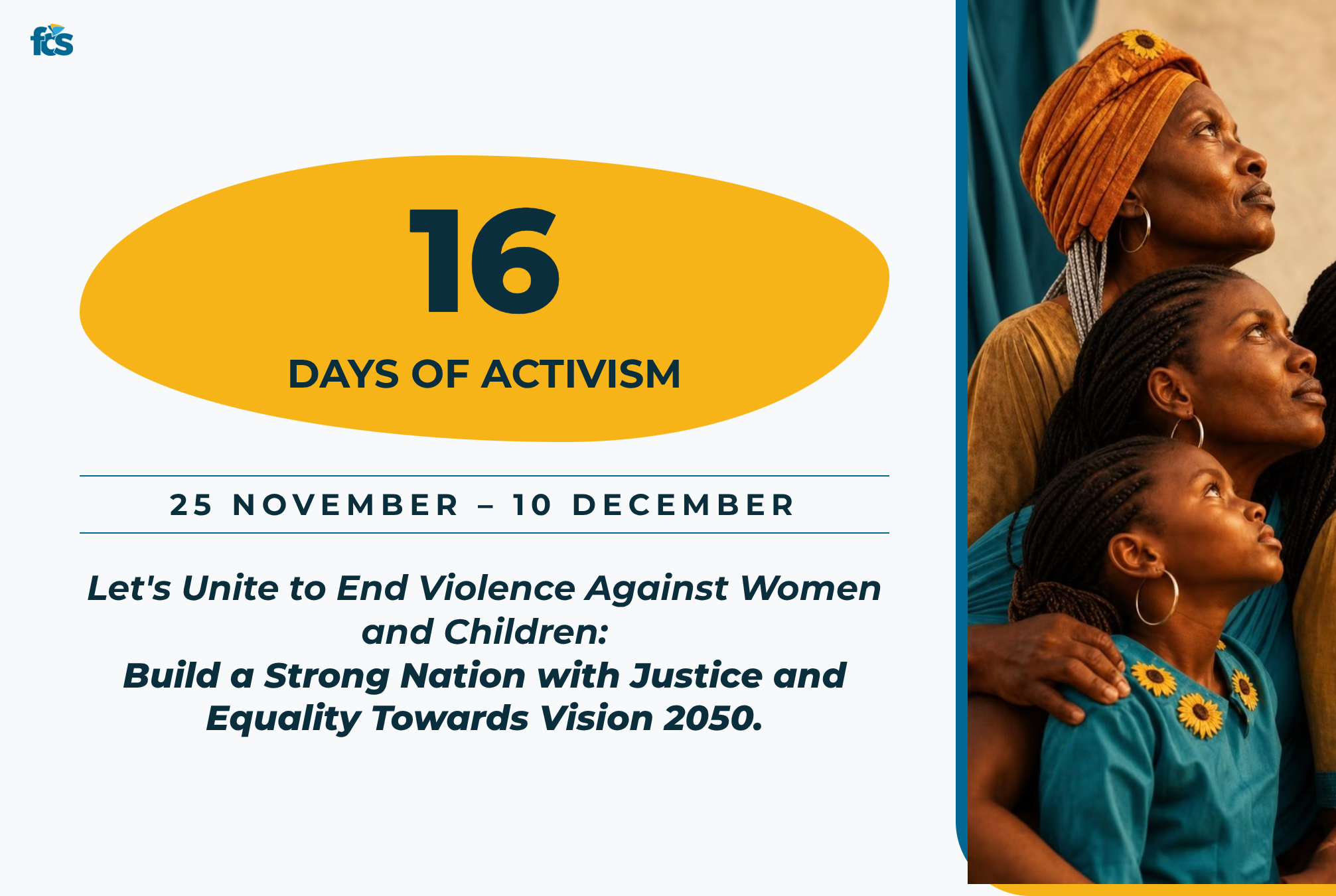
Dodoma, Tanzania, 25 November 2026 - Foundation for Civil Society (FCS) joins the Government of Tanzania, Civil Society Organisations, Development Partners, United Nations agencies and other stakeholders in commemorating the 2026 16 Days of Activism Against Gender-Based Violence, with the national campaign officially launching today in Dodoma.
The 16 Days of Activism Against Gender-Based Violence is an annual global campaign that runs from 25th November, the International Day for the Elimination of Violence Against Women, to 10th December, Human Rights Day. It provides a platform for raising awareness, mobilising collective action and strengthening efforts to prevent and eliminate gender-based violence.
In Tanzania, the campaign is coordinated by Women in Law and Development in Africa (WiLDAF Tanzania), in collaboration with Government institutions, the GBV MKUKI Coalition, civil society organisations, development partners and other stakeholders. FCS is proud to be among the partners supporting the implementation of this year's national campaign. Through its active engagement, FCS seeks to strengthen collective civil society action and foster collaboration among stakeholders working to advance gender equality and end violence against women and children.
Under the national theme, “Tuungane Kutokomeza Ukatili dhidi ya Wanawake na Watoto: Jenga Taifa Imara Lenye Haki na Usawa Kuelekea Dira 2050,” this year's campaign seeks to move beyond awareness towards sustained action. It places particular emphasis on strengthening prevention, improving survivor protection and access to justice, advancing legal and policy reforms, and promoting institutional accountability. The campaign also underscores the importance of translating national commitments into meaningful changes in the lives of women and children.
From Commitments to Action: Building a Tanzania Free from Violence
As part of FCS's contribution to the national campaign, its Co-Executive Director, Agnes Hanti, will moderate a national dialogue on building a Tanzania free from violence against women and children, in the context of Tanzania's Development Vision 2050. The dialogue brings together representatives from Government, law enforcement, prosecution services and civil society to examine the institutional and societal barriers that continue to undermine efforts to prevent and respond to violence.
Discussions will focus on translating national commitments into practical action, strengthening institutional accountability and survivor protection, promoting positive and non-violent approaches to child discipline, and challenging the normalisation of violence within communities. The dialogue also provides an opportunity to reflect on the collective responsibility of institutions and communities in preventing violence, responding effectively when it occurs and ensuring that survivors have access to justice and appropriate support.
For FCS, ending violence against women and children is both a human rights and a national development imperative. Achieving the aspirations of Tanzania's Development Vision 2050 requires communities in which women and children can live safely, exercise their rights and participate fully in social and economic development. Civil society organisations play a critical role in realising this ambition, particularly through their proximity to communities, understanding of local realities and ability to translate national commitments into community-level action.
Investing in Locally Led Solutions
FCS works to build a thriving civil society that brings development closer to the people through grant-making and capacity strengthening. Through its partnerships, FCS is supporting civil society organisations to address the underlying drivers of gender inequality, strengthen community protection mechanisms and promote the rights and wellbeing of women and children. Central to this approach is the recognition that sustainable change requires investment not only in community-level interventions but also in the organisations and leaders driving these interventions.
Strengthening Women-Led and Youth-Led Civil Society Organisations
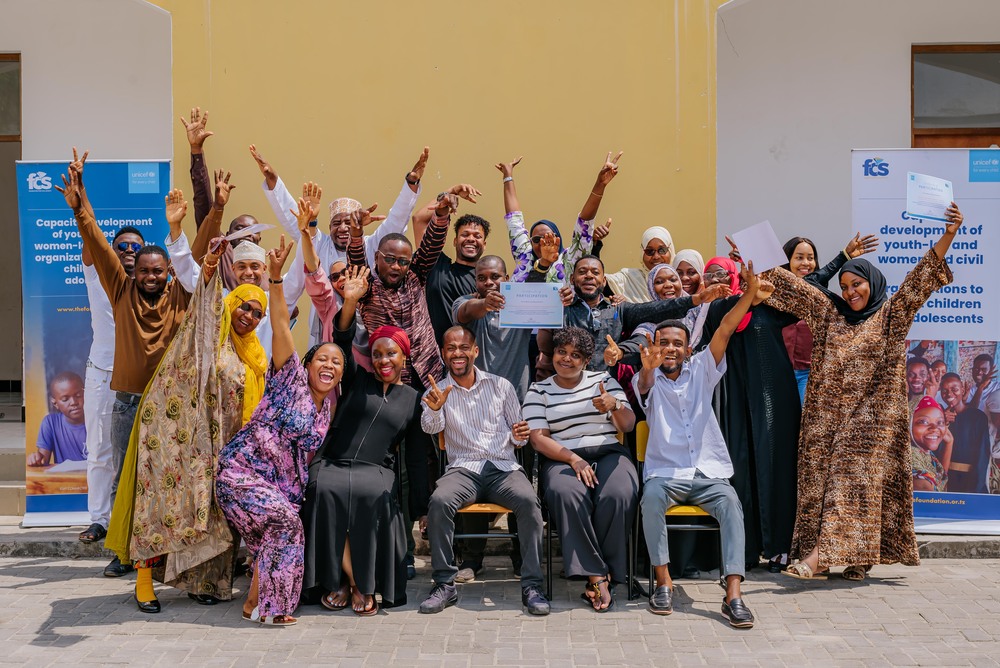
Through its partnership with UNICEF Tanzania, FCS has strengthened the capacities of 30 youth-led and women-led civil society organisations across Dar es Salaam, Zanzibar and Songwe. Following capacity strengthening, 15 organisations received seed grants totalling TZS 375 million to implement community- and school-based interventions addressing the needs of children and adolescents, including the prevention of and response to violence against women and children. The partnership recognises the important role that local civil society organisations play in identifying community needs and developing solutions that are responsive to local contexts.
Beyond the provision of funding, the partnership is strengthening organisations' knowledge and skills in safeguarding, child protection and gender-responsive programming. Emerging changes include the application of this learning through the development of organisational safeguarding systems, reporting mechanisms and community-led interventions. By combining institutional capacity strengthening with access to funding, the partnership is enabling organisations to improve their internal practices while strengthening their ability to deliver interventions that respond to the needs of the communities they serve.
Investing in the Next Generation of Feminist Leadership
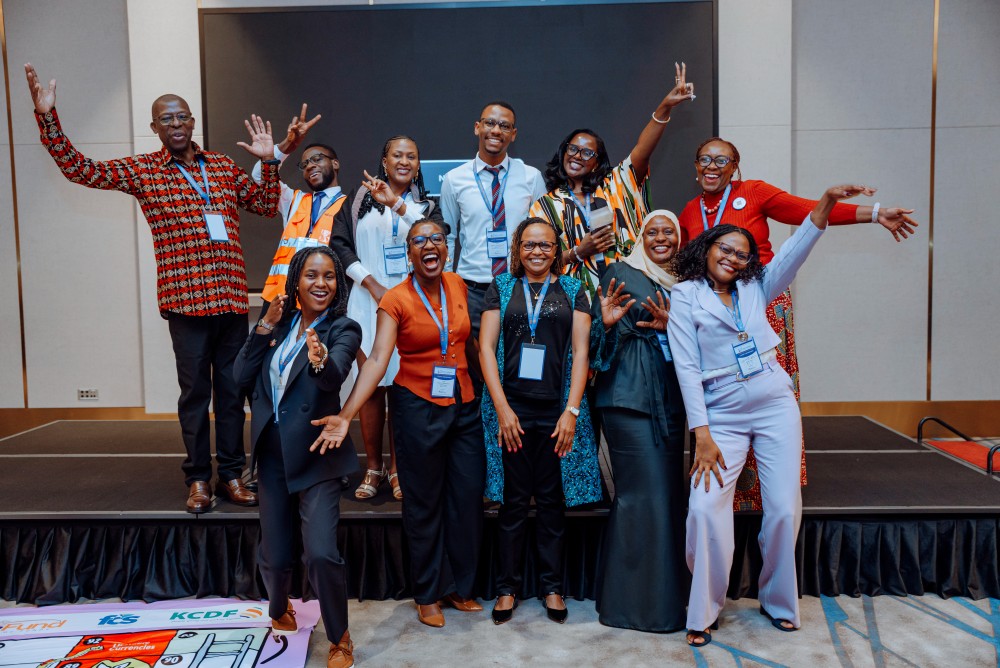
Through its partnership with the Ford Foundation, FCS is supporting the growth and institutional sustainability of two young feminist organisations: Young and Alive Initiative (YAI) and Theatre Arts Feminists (TAF). Through fiscal sponsorship, flexible funding and institutional strengthening, the partnership seeks to create an enabling environment for young feminist organisations to strengthen their leadership, build resilient institutions and deliver sustainable programming. This approach recognises the importance of nurturing the next generation of feminist leaders and supporting their contribution to advancing gender equality and social justice in Tanzania.
Young and Alive Initiative (YAI) empowers young people through community-led initiatives advancing gender equality, sexual and reproductive health and rights, and meaningful youth participation. Its 2026 Young and Alive Summit amplified the voices of 1,466 young people across Tanzania Mainland and Zanzibar. The Summit secured commitments from the Ministry of Health to strengthen youth-friendly health services, address gender-based violence and child marriage, and promote meaningful youth participation in health interventions. These developments demonstrate the potential of youth-led advocacy to influence national priorities and institutional responses to issues affecting young people.
Theatre Arts Feminists (TAF) uses theatre, storytelling and creative expression to challenge harmful social and gender norms and create safe spaces for dialogue within communities. By using accessible and participatory forms of artistic expression, the organisation creates opportunities for communities to engage with sensitive issues affecting women and girls. Emerging outcomes from its work include improved awareness of rights and available support services, alongside increased confidence among girls to discuss issues affecting their wellbeing. TAF is also implementing the UNICEF-supported Usalama Kwanza project through its partnership with FCS.
Strengthening the Civil Society Ecosystem for Lasting Change
Addressing gender-based violence requires investment not only in individual projects but also in the organisations, movements and systems that sustain change over time. For FCS, this means strengthening the institutional capacity, financial sustainability and leadership of grassroots, women-led and youth-led civil society organisations, while creating opportunities for collaboration, collective learning and advocacy. Strong and resilient civil society organisations are better positioned to respond to emerging community needs, sustain their interventions and contribute to long-term social change.
As FCS refreshes its institutional strategy, it is building on its experience in grant-making and capacity strengthening towards a broader focus on civil society ecosystem strengthening and systemic change. Partnerships between Government, civil society, development partners, the private sector and communities remain central to this approach. By strengthening collaboration across these different actors, FCS seeks to contribute to an environment in which locally led solutions can thrive and civil society can effectively contribute to addressing complex development challenges, including gender-based violence.
Beyond the 16 Days of Activism
Throughout the campaign, FCS will be showcasing the work of its civil society partners, highlighting locally led approaches to advancing gender equality, challenging harmful social norms and protecting the rights of women and children. FCS will also join other stakeholders at the Anti-GBV Champions Awards on 8th December 2026 in Dar es Salaam, recognising individuals and organisations whose contributions demonstrate the importance of sustained action in preventing and eliminating gender-based violence.
While the 16 Days of Activism provides an important opportunity to raise awareness and mobilise collective action, ending gender-based violence requires a commitment that extends well beyond the campaign. It requires sustained investment in locally led solutions, stronger institutional responses, meaningful community participation and accountability across all sectors of society. FCS remains committed to investing in civil society and strengthening partnerships that contribute to lasting changes in attitudes, behaviours, institutions and systems.
Together, we can build a Tanzania where every woman and child can live in safety, dignity and equality.